Booked appointments, not enquiries.
We fill your team’s calendar with homeowners who have seen the starting price and raised their hand anyway. What they walk into is yours to decide: a site visit, a call from your team, or a consultation.

Eight days. Twenty ads. 127 leads at RM17.91.
A live lead campaign from July 2026, shown exactly as it sits in Meta Ads Manager. Every version that ran, what it cost, and what it produced.
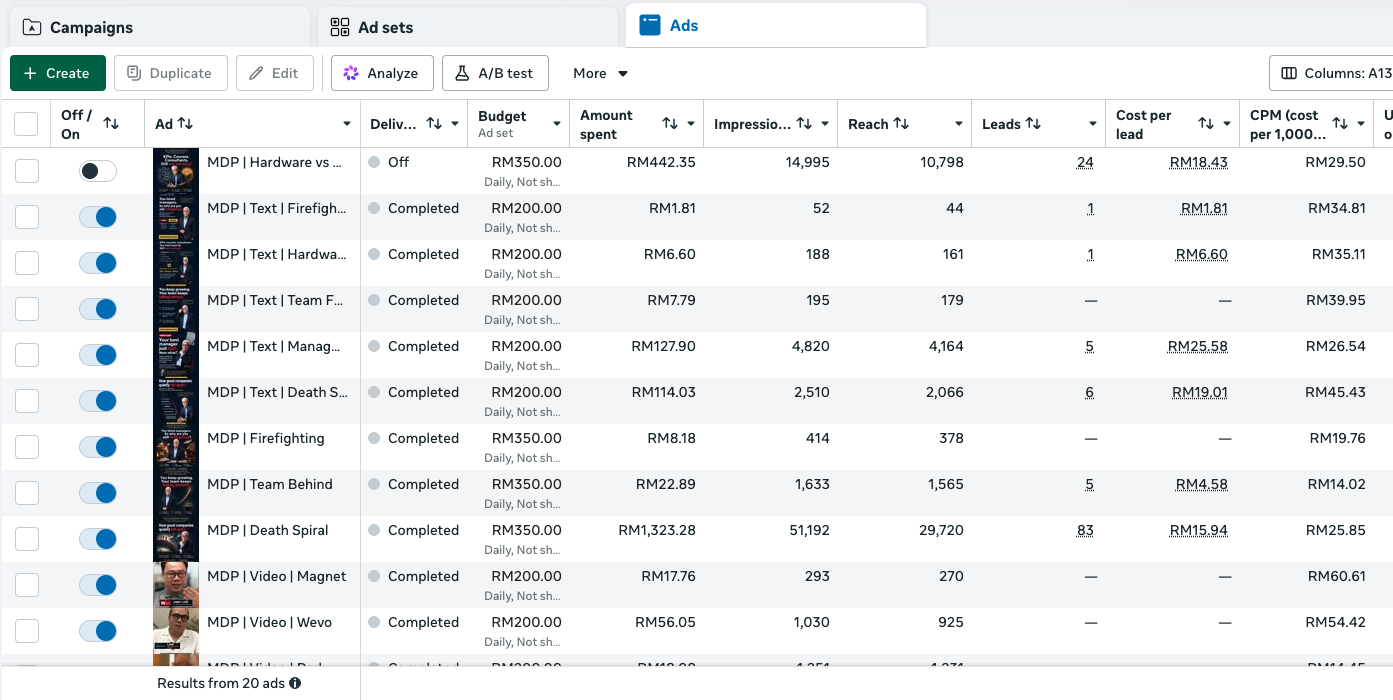
Same week, same audience, double the decision makers.
Two angles ran side by side, same targeting, same registration page. One named a problem only the owner feels. The other described tools.

Names the owner’s problem
- SpendRM1,323.28
- Leads83
- Cost eachRM15.94
- Decision makers72%

Describes the tools
- SpendRM442.35
- Leads24
- Cost eachRM18.43
- Decision makers39%
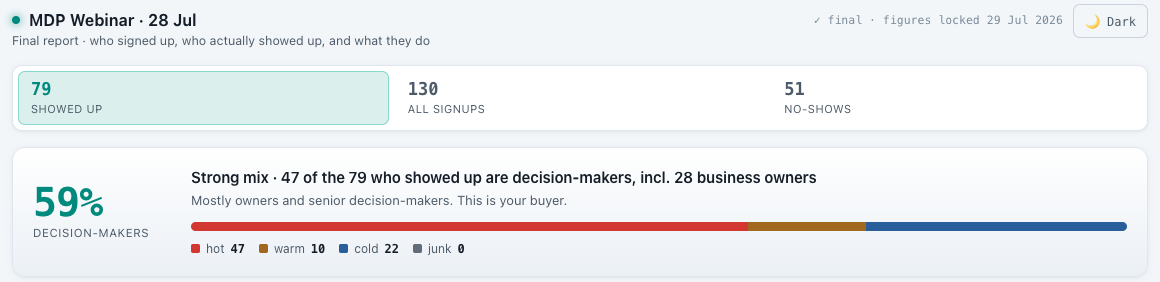
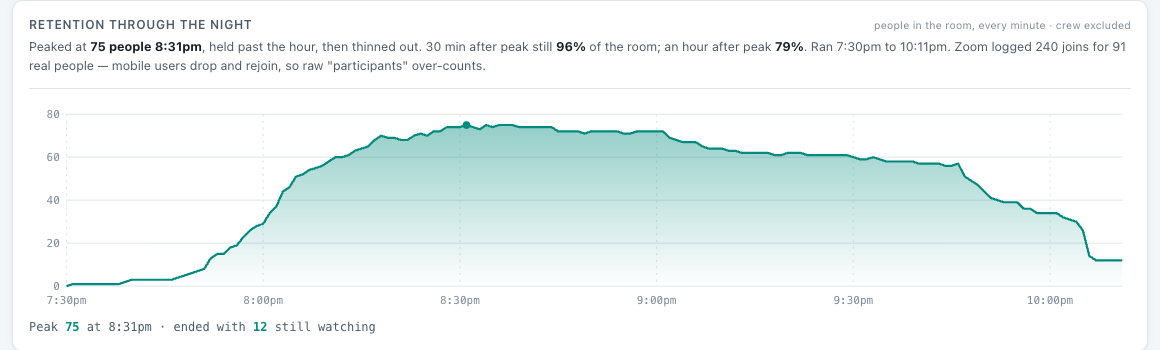
Who was in the room, and how long they stayed.
Job role is a required field at registration, so this is what people entered, graded one by one. 79 of 130 registrations attended live, against a 20 to 40 percent norm for a free webinar.
Nothing about your offer changes.
The funnel puts qualified homeowners in front of your team and filters the rest out first. You decide what the booking is. If your team would rather call and qualify before anyone drives out, the machine ends at that call instead. We build backwards from whatever your people can attend and convert.
-
Income cannot be targeted
Meta offers no income or job-title targeting in Malaysia. Audience settings on their own cannot find a homeowner who can afford a system.
-
So the ad does the filtering
The creative is written so only the intended buyer answers it. That single choice moved decision makers from 39% to 72%.
-
The offer names its reader
Conditions are stated on the ad itself. Naming the reader costs reach, which is the intended effect.
-
The form asks a qualifying question
House type and current bill are required. A shorter form would produce more leads and fewer buyers.
-
Every lead is graded
Each registration is scored and joined back to the ad that produced it, so budget follows the ad bringing real buyers.
-
Reported as appointments
The weekly number is booked appointments and how many were attended, not lead count. Cost per lead is shown underneath, never as the score.
The webinar format is right. Here is how we would aim it.
Educating before selling is the correct instinct for a purchase this size, and a live session does it better than any landing page. The open question is only who it is pointed at. A session on saving electricity draws a wide audience cheaply, and a large share of them will never own a suitable roof. The campaign above puts a number on that trade: the broader, cheaper angle halved the proportion of people who could authorise a purchase.
Same session, same topic, aimed at a homeowner who already knows the bill is the problem. Fewer registrations, a shorter list, and a far higher share your team can convert.
- State the starting figure on the registration page. A published floor filters for free. A quote handed out later only gives people a number to negotiate down.
- Set the conditions in the ad. Landed property, bill above a stated amount. Said before anyone fills in a form.
- Two questions on the form. House type and current monthly bill.
- One offer at the end of the session. Whatever your team wants to walk into, at a fixed time, with a named person attending.
- Three languages, three creatives. Malay, English and Chinese as separate ads, with language captured so the lead reaches the right member of your team.
What happens if you say yes.
Five numbers we need from you.
These set the offer and the pricing. The first decides most of the campaign, because it becomes the figure we publish. Solar is a different market at a different price, so we will not put a cost per appointment in writing before we have seen 02 and 03 — a figure quoted on day one is a guess.
- 01Your price floorThe lowest job worth taking. This goes on the page and stops price shoppers before they cost you a call.
- 02Close rate off an appointmentOut of ten appointments your team attends, how many become signed jobs.
- 03Average residential job valueRooftop only, not blended with commercial or solar farm work.
- 04Appointments you can staff monthlyThe real figure with your current team. Booking more than you can attend well helps nobody.
- 05Who attends and who signs offThe person attending the appointments, and who approves the campaign week to week.